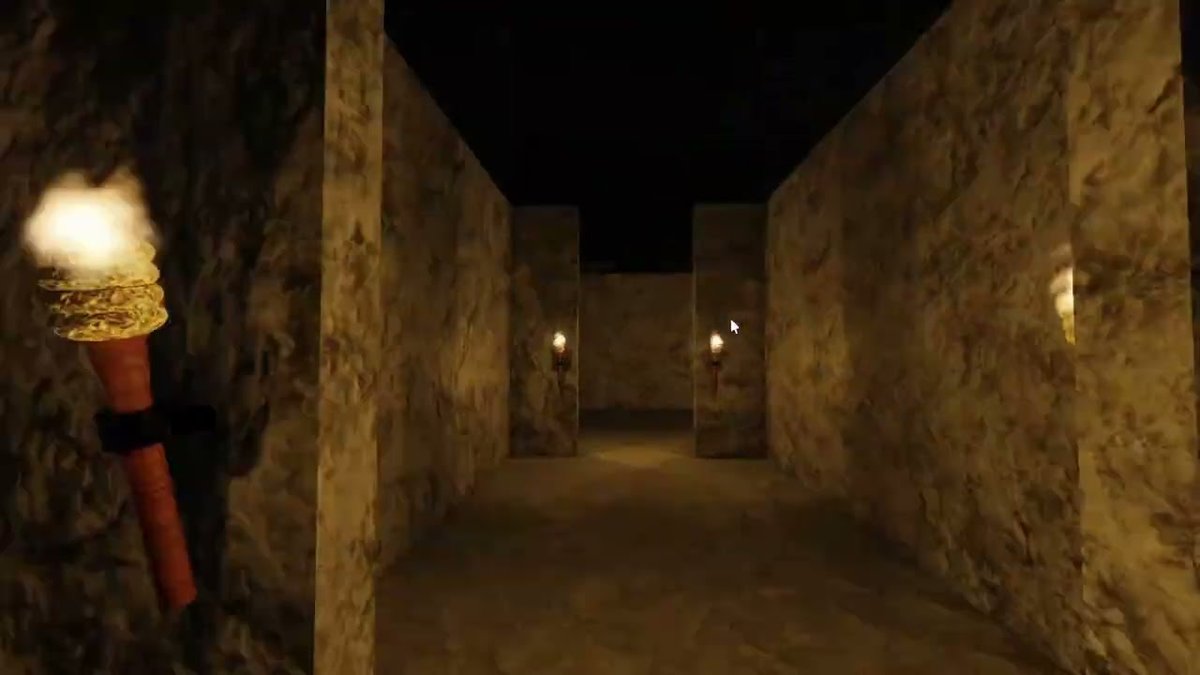
Ever stare at a blank map, dreaming of epic quests, hidden treasures, and perilous encounters, only to feel overwhelmed by the sheer scale of creation? Crafting an immersive dungeon from scratch can be a monumental task, but what if you could accelerate that process without sacrificing depth or creativity? Imagine building a vibrant, dangerous world in a precisely sized space, like a 22 x 26 grid, where every corridor, chamber, and secret has a purpose.
This is the power of a dungeon generator. Far from being a mere dice roll, these tools empower game masters and storytellers to weave intricate narratives and build compelling environments with incredible efficiency. Whether you're planning a quick one-shot or a sprawling campaign, understanding how to leverage these generators can transform your prep time and ignite your imagination. To truly master the art of automated world-building, you'll first want to Discover dungeon generator types and uses, exploring the diverse approaches and applications available to you.
Why a 22 x 26 Dungeon is Your Next Perfect Adventure Size
A 22 x 26 dungeon offers a fantastic sweet spot for adventure. It's large enough to contain multiple encounters, secret passages, and intriguing lore, yet manageable enough not to become an endless slog for your players. This specific dimension encourages modularity, allowing you to fit pre-generated or custom pieces together like a puzzle, creating a cohesive and compelling narrative flow. Imagine starting with a central square area, perhaps 20 x 20 ft., and then expanding outwards with randomly placed doors and passages, each leading to new discoveries.
The beauty of this approach lies in its flexibility. You can generate elements from scratch or drag and drop pre-designed pieces onto your grid map, ensuring every inch of your 22 x 26 space is utilized effectively. If you're keen to maximize every corner of your map, it's essential to learn how to Design dungeons for specific sizes to truly make the most of your designated area.
Building Blocks: Constructing Your Modular Dungeon
At the core of any generated dungeon are its fundamental components. These modular pieces, from the initial entry point to winding passages and hidden chambers, come alive with descriptive elements that paint a vivid picture for your players.
Laying the Foundation: The Starting Area
Every dungeon needs an entrance, a place where the adventure truly begins. Our generator often proposes a 20 x 20 ft. square as a starting area, typically featuring a door on two walls and a passage on the third. But it's not just about geometry; it's about atmosphere.
- Sensory Details:
- Noises: A subtle humming might fill the air, hinting at unseen magical forces.
- Air: It could be clear and drafty, suggesting unseen openings or ventilation.
- Odors: An earthy scent often pervades older structures, connecting players to the ancient world beneath their feet.
- Purpose & State: Perhaps this room was once a "Kitchen for workers," now showing signs of its past life, like "Ashes, mostly burned."
- Contents: The most dominant inhabitant might already be present: a "Monster" waiting for intruders.
- Features: Don't forget the small details like "Cobwebs" or even "Slime (harmless)" to add texture.
- Furnishings & Personal Items: A "Wall basin and font" or "Couch (Religious)" might suggest a "Temple or Shrine" theme, while a discarded "Basket" or "Smoking pipe" tells a story of the previous occupants.
Navigating the Depths: Passages and Doors
Once past the starting area, the dungeon unfolds through a network of passages and doors, each presenting new choices and potential dangers.
- Passages: These can vary in width – 10 ft., 20 ft., or even a grand 40 ft. passage complete with pillars. They might lead you:
- Straight ahead for 20 ft. or 30 ft.
- Into a sharp turn, 10 ft. to the left.
- To a diagonal passage, 30 ft. to the left.
- Or abruptly end in a "dead end," which always carries a 10% chance of concealing a "secret door."
- Doors: Encountering a door immediately raises questions. Is it a "Wooden" door, perhaps rotten and easily forced? A sturdy "Stone (barred or locked)" door, signaling a significant barrier? Or a formidable "Portcullis," suggesting a deeper threat or a fortified "Stronghold"? Doors lead to:
- A grand "Chamber."
- A 20 ft. diagonal passage to the left.
- A straight 20 ft. passage.
- Or a 10 ft. "T intersection passage" offering a choice of left or right.
The Heart of the Dungeon: Chambers (Rooms)
Chambers are the canvas for encounters and discoveries. When a passage or door opens into a room, the generator fills it with purpose and peril. These are typically square, 20 x 20 ft. spaces, often with a single exit—a 10 ft. corridor on the wall opposite the entrance.
- Purpose & State: Imagine an "Office for mine supervisor," now "Ashes, mostly burned," its past echoing through its destruction.
- Contents & Features: It could hold a "Random Trap," or simple descriptive features like "Cobwebs," "Dripping blood," or "Cracks (floor)" adding to the ominous ambiance.
- Furnishings & Personal Items: "Hassock," "Sheet," "Couch (Religious)," or a "Brazier" suggest a ritualistic space, especially with "Pews (Mage)" or an "Incense burner." Personal touches like a "Statuette or figurine" or a "Bottle" and "Stopper" hint at former occupants.
Connecting the Levels: Stairs
For multi-level dungeons, "Stairs" are essential. If your dungeon is too compact for multiple floors, the generator will reroll this feature. A "Shaft (with or without elevator)" leading down one level to a chamber can add dramatic verticality to your adventure, transforming a simple linear crawl into a more complex exploration.
Populating Your Dungeon: Life, Lore, and Danger
A dungeon isn't just walls and corridors; it's a living, breathing environment filled with potential. This is where the generator truly shines, adding layers of detail that turn a map into a narrative.
Hidden Discoveries: Contents, Monsters, and Hazards
What adventurers find—or fail to find—can shape the entire campaign.
- Contents: A dusty "Container" might hold nothing but innocuous "Powder," while a venerable "Book, Scroll, or Tome" could reveal a "Dictionary," hinting at lost languages or scholarly pursuits.
- Monsters: A monstrous inhabitant isn't just a combat encounter; it has a story. This "Monster" might have a compelling "Motivation" like "Find a sanctuary," making them temporarily peaceful. Perhaps it has a distinctive "Personality," like a "Joker" who "taunts its enemies," adding a unique flavor to the interaction.
- Random Hazards: Beyond the creatures, the dungeon itself presents dangers. "Spiderwebs," for instance, aren't just scenery; they're a DC 12 Dexterity check to avoid being restrained, requiring a DC 12 Athletics or Acrobatics check to escape. With AC 10 and 15 HP, they're vulnerable to fire but immune to bludgeoning, piercing, and psychic damage.
- Random Obstacles: These are larger, environmental challenges. Imagine a "Reverse gravity effect" causing creatures to fall toward the ceiling, creating an immediate, disorienting threat that can affect multiple rooms. This level of detail transforms a simple map into an encounter-rich environment. To really make your dungeon feel alive, you'll need to learn how to Populate and detail dungeons with more than just stat blocks.
The Element of Surprise: Traps and Tricks
Dungeons are notorious for their hidden dangers, and a good generator understands the difference between a deadly trap and a perplexing trick.
- Random Traps: These are dangerous. A trap might be "Triggered" by something as innocent as being "Looked at (mural, arcane symbol)." Its "Severity" is often "Dangerous" (DC 14, +7 to-hit). The "Effect" could be a "Collapsing staircase" that creates a ramp, depositing characters into a pit at its lower end. The "Damage" scales with character level: 2d10 for Levels 1-4, up to a devastating 18d10 for Levels 17-20.
- Random Tricks: Less deadly but equally perplexing, tricks add quirky flavor. An "Object" like a "Pool of water" might have an "Effect" causing "Confusion (targets all creatures within 10ft.)," which can be permanent or dispelled with magic.
Your Toolkit for Dungeon Creation
Whether you prefer the click of a mouse or the rustle of paper, there are diverse ways to bring your 22 x 26 dungeon to life.
Embracing Digital: Online Generators
For speed and convenience, digital and online tools are unparalleled. They can instantly churn out entire dungeon layouts, complete with rooms, passages, and even basic descriptions, perfectly scaled for your chosen dimensions. You can experiment with different "Dungeon Types" like a sprawling "Maze," a fortified "Stronghold," or a dangerous "Death Trap Lair." They’re invaluable for getting a quick start and iterating on ideas. For those eager to streamline their world-building, it's highly recommended to Explore Top Dungeon Generators and find the perfect digital assistant for your needs.
The Hybrid Approach: Manual & Digital Synergy
Sometimes, the best solution combines the best of both worlds. Start with a digital generation to get your core 22 x 26 layout, then manually tweak, add, and customize the details. You can drag and drop modular pieces onto a digital grid, then add unique descriptive elements, specific monster motivations, or tailor traps to your party's strengths and weaknesses. This blend allows for efficiency alongside unparalleled creative control. If you love the idea of guiding the generator's hand, delving into Manual & Hybrid Dungeon Generation will give you the control you crave.
Forge Your Next Great Adventure
A 22 x 26 dungeon generator is more than just a randomizer; it's a creative partner, an idea factory, and a time-saver wrapped into one powerful tool. By understanding its modular components, descriptive elements, and varied challenges, you can craft adventures that feel both organic and exciting. So, take the leap, experiment with generating your next subterranean masterpiece, and watch as detailed fantasy adventures spring to life before your very eyes. The depths await your command!