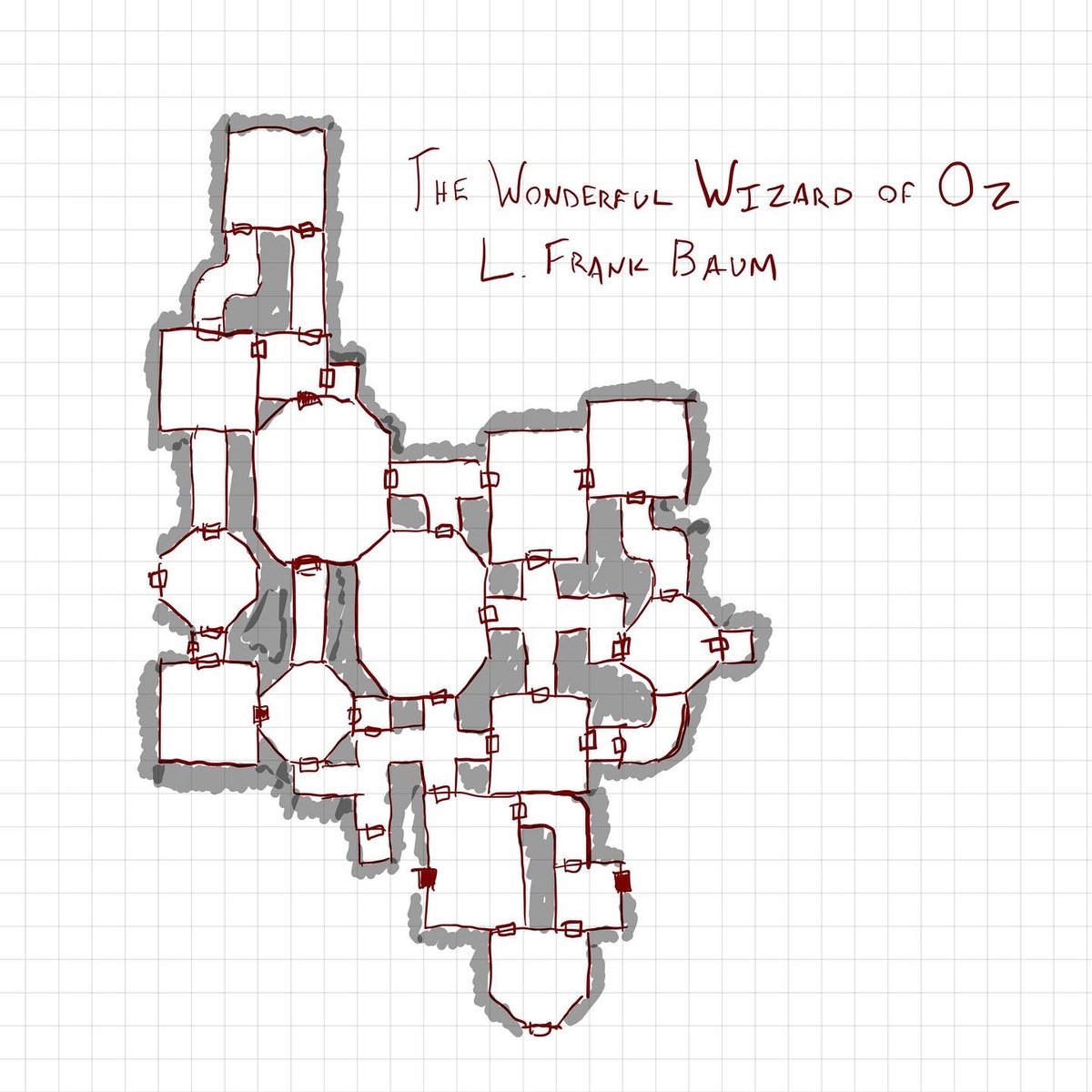
The thrill of uncovering a new dungeon, a sprawling cave system, or a labyrinthine castle level is a cornerstone of countless games. But behind that sense of discovery lies a crucial design challenge: how do you consistently deliver fresh, engaging layouts without manually crafting every single one? This is where Manual & Hybrid Dungeon Generation Techniques come into play, offering a spectrum of tools that blend the artistry of handcrafting with the efficiency of algorithms. It’s about building worlds that feel both unique and deliberately designed, from the twist of a corridor to the placement of a key boss arena.
At a Glance: Key Takeaways
- Diverse Toolkit: Dungeon generation algorithms range from structured approaches like Binary Space Partitioning (BSP) to organic methods like Cellular Automata, each with distinct strengths.
- Balance of Control: Algorithms offer different levels of predictability versus emergent complexity, influencing layout, room count, and feature placement.
- The Power of Hybrids: Combining multiple techniques allows designers to leverage the best aspects of each, creating richer, more controlled, yet varied levels that feel hand-authored.
- Beyond Geometry: Effective generation isn't just about carving space; it's about integrating with navigation, lighting, loot, and pacing to create a cohesive player experience.
- Iterative Process: Successful procedural generation requires continuous tuning, playtesting, and refinement to match desired aesthetic and gameplay goals.
Why Dungeon Generation Matters: A Designer's Toolkit
In games ranging from roguelikes and action RPGs to platformers and survival titles, the demand for replayability and fresh content is insatiable. Manually building hundreds or thousands of unique dungeons is often impractical, if not impossible. Procedural generation offers a potent solution, but not all algorithms are created equal. The choice hinges on your desired play aesthetics, the constraints of your game engine, and the specific "feel" you're aiming for.
When evaluating an algorithm, seasoned designers consider its topology (how spaces are connected), controllability (how much influence you have over the output), and tunable parameters (the knobs you can twist to get different results). The best techniques reliably integrate with crucial gameplay systems like navigation meshes, dynamic lighting, and intelligent loot placement, ensuring that a procedurally generated space is not just visually novel, but genuinely playable and engaging.
Blueprint Builders: Delving into Core Generation Algorithms
Let's break down the fundamental algorithms that form the backbone of most dungeon generation systems, understanding their mechanisms, advantages, and limitations.
Binary Space Partitioning (BSP): The Structured Approach
Imagine taking a large canvas and repeatedly cutting it in half, either horizontally or vertically, until you have many smaller rectangles. That's the essence of Binary Space Partitioning (BSP). It's a highly controlled method, ideal when you need predictable outcomes for room counts and sizes.
- How it Works: BSP typically starts with a large grid, say 64x64 tiles. It recursively bisects this space, creating child partitions. This process continues until each 'leaf' node (the smallest, un-split rectangles) falls within a specified area range (e.g., 6-14 tiles tall or wide). Within each leaf, a room is then carved. Crucially, sibling leaves are connected by corridors that generally run along the line where their parent was split.
- Benefits You'll Love: BSP virtually guarantees path connectivity between all rooms, making navigation mesh generation straightforward and predictable. The deterministic bounding of space also eases integration with lighting solutions and allows for adherence to constraints like player spawn radii or performance budgets. If you need exactly 14 rooms, with 12 for combat and 2 for minibosses, BSP gives you that direct control.
- The Rectilinear Reality: The primary tradeoff is the often rectilinear, grid-like visual aesthetic. Without post-processing, you're left with straight, potentially monotonous corridors.
- Taking Control: Designers can inject variety through post-processing: chamfering corners, generating L-shaped rooms within leaf nodes, offsetting corridors, using stochastic split ratios, or introducing diagonal connectors. You can define room sizes based on the hierarchy of the leaves, ensuring larger, more important rooms occupy larger partitions.
Cellular Automata: Nature's Caverns
If BSP is about architectural precision, Cellular Automata is about organic, natural growth. This technique excels at generating the sprawling, blobby caverns and smooth voids characteristic of subterranean grottos.
- How it Works: Cellular Automata starts with a grid of tiles, each initially designated as either a "wall" or "floor." A common setup seeds the map with 40-55% walls. Then, a set of local rules is iteratively applied. For example, a common rule is: "If a floor tile has five or more wall neighbors (using a Moore neighborhood, which includes diagonals), it becomes a wall. If a wall tile has four or fewer wall neighbors, it becomes a floor." Running these rules 4-6 times on, say, a 100x100 grid, quickly smooths out the initial noise into coherent cave systems.
- Benefits You'll Love: The iterative nature naturally produces a highly organic, natural-looking "cave" feel. The smooth voids and irregular shapes are difficult to achieve with other purely geometric methods.
- The Connectivity Conundrum: The main challenge with Cellular Automata is unpredictable connectivity. You often end up with multiple isolated regions and narrow choke points that can frustrate players.
- Repairing and Guiding: To fix connectivity, you'll need additional steps:
- Flood-fill to identify and keep only the largest contiguous region, discarding smaller isolated caves.
- Morphological opening (erosion followed by dilation) to widen narrow corridors.
- Shortest-path tunneling to strategically connect critical regions.
Control is statistical; influenced by the initial wall density and the number of iteration counts. Masking with distance fields can encourage central caverns, ensuring the player starts in a substantial area. This method is generally weaker for enforcing strong pacing beats or key-lock loops without additional overlay systems.
Random Walkers: The Drunkard's Path to Exploration
For sheer speed and simplicity, especially during rapid prototyping or game jams, Random Walkers are hard to beat. They quickly sketch out winding paths and nooks that feel surprisingly natural.
- How it Works: The "Drunkard's Walk" is a classic example. You start a "walker" agent at a central point on your map. The walker then takes random steps (e.g., in one of four cardinal directions), carving floor tiles as it goes, until it exhausts a predefined "step budget" (e.g., 6,000-12,000 steps on a 120x120 grid).
- Benefits You'll Love: This method quickly produces winding main hallways with charming side nooks, ideal for early combat and lighting tests. It naturally prevents players from walking off the map edges and, with some tuning, can avoid excessive backtracking or dead ends by favoring "new" cells.
- Guarantees Are Weak: Random Walkers offer weak guarantees regarding room variety, backtracking loops, or ensuring specific set-piece spaces. It's difficult to guarantee a symmetric arena or a specific layout with this method alone.
- Enhancements and Control: You can mitigate these weaknesses with several tweaks:
- Multiple walkers to create a more complex network.
- Biased turns (e.g., a penalty for turning left twice in a row) to influence path shape.
- "Carve on new cells only" rules to prevent excessive retracing.
- Periodic placement of prefab rooms to inject specific gameplay moments.
Random walkers are often paired with other methods; a walker can sketch a primary backbone, followed by a room placer that snaps rectangular rooms to vacant areas along its path.
Wave Function Collapse (WFC): Tiling with Taste
Wave Function Collapse (WFC) is a surprisingly versatile technique that brings local coherence and thematic style to procedural generation. If you want your generated content to look like it was designed by a human artist, but in infinite variations, WFC is a powerful tool.
- How it Works: WFC doesn't explicitly "generate" a dungeon in the traditional sense. Instead, it "synthesizes" a larger output by preserving local patterns and enforcing adjacency constraints learned from a small example image or tilemap. You feed it a small sample (e.g., a few rooms, specific door placements, wall segments), and it infers the rules for how these tiles or "stamps" can connect. It then propagates these constraints across a larger grid, resolving cells one by one until a complete, valid output is achieved.
- Benefits You'll Love: WFC excels at thematic cohesion and consistent microstructures. It ensures that specific door placements, tile alignments, or structural motifs (like decorative trim around an archway) are respected throughout the generated space, giving it a polished, handcrafted feel.
- The Contradiction Conundrum: The main drawback is that WFC can trigger backtracking or restarts if it encounters a contradiction—a situation where no valid tile can be placed without violating an adjacency rule. This is especially common with tight, restrictive, or underrepresented rule sets.
- Guiding the Synthesis: To get the most out of WFC:
- Keep your pattern catalogs small and focused.
- Prefer rotational variants of patterns to increase flexibility without increasing rule complexity.
- Inject "anchors" (e.g., fixed doors, a pre-placed boss room) to guide the solve and reduce the initial entropy, making the process more stable.
WFC does not inherently account for high-level structures like room counts or critical path length. It typically requires a separate graph validator layer to repair or reject maps that don't meet playability checks after generation.
Graph Grammars: Designing the Narrative Flow
For games that demand a specific narrative structure, a particular pacing, or complex key-lock loops, Graph Grammars offer unparalleled topological control. This method operates at a higher level of abstraction than tile-based approaches.
- How it Works: Instead of tiles or cells, Graph Grammars manipulate abstract graphs representing connections between "nodes" (e.g., rooms, areas, challenges). You start with a simple graph (e.g., a linear path from "start" to "boss"). Then, you apply a series of "production rules" that rewrite the graph. A rule might be "replace an edge with a diamond loop" (adding an optional side path), or "insert a gated branch requiring a key." Once the graph is fully rewritten according to your design rules, its nodes are embedded into actual geometry, typically using a layout solver to place rooms.
- Benefits You'll Love: Graph Grammars guarantee high-level design metrics like pacing, tutorial sequences, and critical path lengths while still offering variability in the specific layout. You can define that a player must encounter a certain number of enemy encounters before a boss, or find three keys to unlock the final area, and the grammar will enforce it.
- Complexity in Rules: The primary tradeoff is the complexity involved in designing and verifying the production rules. It requires a test harness to assert properties like path uniqueness, optional content percentage, and overall playability.
- Guidance for Designers: Keep your grammars relatively small (3-7 distinct production rules are often sufficient) and use parameters to vary repeats, branch factors, and gate placements. After the graph is rewritten and rooms are laid out, navigation validation (e.g., pathfinding tests) is crucial. Graph Grammars are often paired with tiling or prefab layers (like WFC) for visual variety within the generated rooms.
The Best of Both Worlds: Harnessing Hybrid Generation
While each algorithm has its strengths, relying on a single technique often means accepting its most significant limitations. This is where hybrid methods shine. By combining the strengths of different algorithms, designers can achieve complex, visually rich, and highly playable dungeons that feel much more "authored" than purely procedural ones. It's about getting the best of both the structured and organic worlds.
- How it Works: A common hybrid pattern involves using BSP for the macro-structure, defining the main rooms and their general connectivity, then deploying a biased random walker or Cellular Automata between these BSP-carved rooms. The walker might then carve serpentine connectors, creating more organic paths and even introducing deliberate loops, while Cellular Automata might fill those spaces with natural cave formations. Another powerful combination is using Graph Grammars for the overarching flow, then populating the individual nodes (rooms) with details generated by WFC or even small, hand-crafted prefabs.
- Benefits You'll Love: The beauty of hybrids is retaining the high-level controllability (e.g., guaranteed room counts from BSP, enforced pacing from Graph Grammars) while adding visual texture, lively paths, and naturalistic details expected in hand-authored dungeons. This approach mimics how human designers often work: starting with a blueprint and then adding organic flair.
- Managing the Interference: The main challenge is balancing the interference between different systems. For example, you need to ensure a random walker doesn't erode the walls of a carefully placed BSP room. Region masks and distance fields are invaluable here, acting as boundaries that protect critical areas from unwanted modification by other systems.
- Reproducibility and Tunability: To ensure generated dungeons are reproducible or tunable, each subsystem (BSP, walker, CA, etc.) should be seeded with a derived pseudo-random number generator (PRNG) sequence. This allows for regeneration of specific layouts with minor parameter tweaks. Post-generation analysis, such as a heatmap of visit counts, can also guide cleanup and optimization, ensuring generated paths are well-traveled and meaningful. Our Our 22x26 dungeon generator is a prime example of combining techniques to achieve structured yet varied outputs, demonstrating how different systems can cooperate to build compelling spaces.
Making It Playable: Integration and Best Practices
Generating geometry is only one part of the equation. A truly great dungeon generator produces spaces that are not just visually interesting but also deeply integrated into the gameplay experience.
Matching the Algorithm to Your Vision
Before diving into code, clearly define your design goals:
- For Strict Room Counts & Connectivity: Opt for BSP. It’s your reliable blueprint maker.
- For Organic Caverns & Natural Spaces: Cellular Automata will give you that blobby, cave-like feel. Be ready to repair connectivity.
- For Quick Prototyping & Winding Paths: Random Walkers are your fast friends. Supplement them with prefabs for key areas.
- For Consistent Art Style & Micro-Motifs: Wave Function Collapse ensures visual cohesion, making your generated content look polished.
- For Narrative Pacing & Complex Gameplay Loops: Graph Grammars are essential for defining story beats, keys, and locks at a high level.
- For Production-Ready, Varied, Yet Controlled Levels: Hybrids are often the pragmatic choice, combining the best of several worlds.
Early Integration with Gameplay Systems
Procedural generation isn't a standalone feature. It's part of a larger ecosystem. Integrate generation with other gameplay systems from the outset:
- Navigation: Always bake navigation meshes or pathfinding graphs immediately after carving geometry. A beautiful dungeon is useless if the player (or AI) can't navigate it.
- Role-Based Rooms: Tag rooms by their intended role (e.g., combat encounter, puzzle room, treasure vault, safe zone). This allows for intelligent enemy spawning, loot placement, and event triggering.
- Streaming & Chunking: Design your generation with streaming and chunk boundaries in mind. This is critical for performance in large open-world or endlessly scrolling dungeons.
- Player Experience First: Constantly ask: "How does this generated space feel to play?" Does it flow well? Are there frustrating choke points? Are key objectives clear?
Iteration and Refinement: The Path to Mastery
No single algorithm is a magic bullet, nor will your first implementation be perfect. Procedural generation is an iterative process:
- Start Simple: Master one algorithm before attempting complex hybrids. Understand its core behavior.
- Parameter Tuning: Play with every parameter. See how small tweaks drastically change the output.
- Playtesting: The most crucial step. What looks good on a debugger might play horribly. Get player feedback early and often.
- Feedback Loops: Use playtesting data to inform changes in your generation parameters or even your choice of algorithms. For example, if players complain about getting lost, you might need a more controlled corridor system or clearer landmark placement.
Beyond the Basics: Broadening Your Horizons
To truly deepen your mastery of procedural generation, explore broader methods beyond specific dungeon techniques. Investigate noise functions for organic terrain, explore different types of grammars for generating complex structures, and understand how constraint satisfaction problems can be applied to layout generation. The more tools you have in your mental toolkit, the better you can cross-pollinate ideas and solve unique design challenges.
Crafting Your Next Adventure: Taking the Reins of Generation
The world of manual and hybrid dungeon generation techniques offers an incredible opportunity to scale your game design ambitions. From guaranteeing narrative beats with Graph Grammars to painting consistent architectural motifs with Wave Function Collapse, and from sketching rapid prototypes with Random Walkers to carving structured spaces with BSP, you have a robust toolkit at your disposal. When you thoughtfully combine these techniques, you unlock the power to create game worlds that are both infinitely varied and deeply cohesive, levels that feel like they were lovingly hand-built, yet appear fresh every single time.
Start small, experiment fearlessly, and always keep the player's experience at the forefront. The goal isn't just to make content, but to craft memorable adventures that keep players coming back for more, eager to see what unique challenges await them in the next procedurally generated delve.